





















How to Plan Your Week Without Overloading Yourself

quick read: ~4 minutes (plus a bonus video!)
Okay, I’m going to be honest with you.
I’m Jenn (you might know me as Corporate Jenn), and for a long time I thought I was planning my week…but I was really just making a very ambitious to-do list.
And then I’d hit Wednesday and think, wait… why am I already behind?
If that sounds familiar, you’re not doing anything wrong.
You’ve probably just never been shown how to plan your week in a way that actually works with real life.
if planning has never made sense to you
We hear this all the time.
“I don’t know how to break things down.”
“I don’t know how long anything takes.”
“I don’t know how people decide what fits in a day.”
And honestly… that makes total sense.
Because most planning advice skips the part where it actually becomes usable.
There’s this gap between what you’re told to do and what that actually looks like in a real week.
“this is the first time planning has actually made sense in my brain”
That’s what we’re trying to fix here.
a little backstory (hi, it’s corporate jenn)
Before coming to Laurel Denise, I worked in the tech industry on development teams.
We followed a framework called Scrum, where work is broken up into short time blocks called sprints.
Basically, you take a set amount of time and decide what you can realistically get done in that window.
Not everything.
Just what actually fits.
Then I took a break from my career to focus on my kiddos…
…and I started planning my weeks like everyone else.
Big lists.
Full days.
Very optimistic.
And I constantly felt behind.
Or I could tell, before the week even started,
that I had put way too much on my plate.
I was planning my ideal week…
not my real one.

the moment it clicked
At some point my “corporate brain” kicked back in and I thought:
what if I used sprint planning… but for real life?
Would that actually work?
Turns out… yes. It really does.
And the reason it works is something most people completely skip: capacity.
the thing no one talks about (but changes everything)
Most of us plan our week like we have unlimited time.
We don’t.
Between work, kids, meals, errands, routines…
your time is already pretty full.
So instead of starting with your task list,
I start with my capacity.
Like… when do I actually have time and energy to do things?
Not my whole day.
Just the parts that are actually mine.
And then I only plan about 80% of that.
Because life happens.
this is where it starts to click
Once you:
- - look at your real week
- - estimate how long things actually take
- - and stop trying to fill every open second
everything feels different.
Your plan feels doable.
You’re not immediately behind.
And you actually finish things.
“seeing how realistic this is finally made it click for me”

want to see how this actually works?
I can explain it… but it really clicks when you see it.
In the video, I walk through a real week
with real constraints
and real decisions about what fits and what doesn’t
It’s not perfect. It’s very real life.
and yes… we turned it into a game
Because honestly, this should feel a little fun.
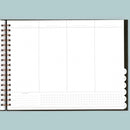
I created a free printable called Sprint to Finish
so you can actually try this out with your own week.
It helps you:
- - map out your time
- - figure out your capacity
- - and “play” through what fits
Instead of guessing… you can actually see it.

if you want to try it right now
Keep it super simple.
look at your week
block off what’s already there
pick 2–3 things that realistically fit
That’s it.
You don’t need a perfect system.
Just one week that works.
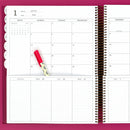
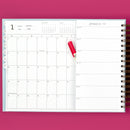
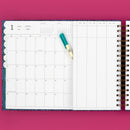
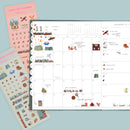
if you’re using a planner
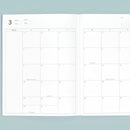
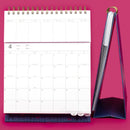
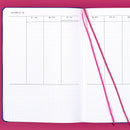
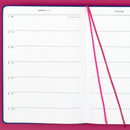
This method gets a lot easier when you can see everything at once.
Your schedule
your tasks
your real availability
So you’re not flipping pages trying to piece it together.
It just works with your brain.
And one of my favorite things lately has been seeing how our community is actually doing this in their planners.
Inside our private Facebook group, people are getting so creative with capacity planning.
Some are using habit trackers.
Some are drawing little circles on an index card to track their hours.
There’s no one “right” way, and that’s kind of the point.
You get to make it work for you.
And yes… capacity stickers are already on our list for a future launch.
Y’all are amazing. Truly. Thank you so much for your support.
one small shift
When my weeks are heavy or out of routine,
this is the method I come back to every time.
It helps me:
- - feel more in control
- - follow through on what I planned
- - and actually feel good at the end of the week
A little less pressure
a little more realistic
And a whole lot more doable.
Self care, friends.

